
Most modern enterprises are suffering from "Software Bloat"—an accumulation of dozens, sometimes hundreds, of disconnected tools deployed over years of rapid digital expansion. Each department adopts specialized software to solve immediate problems, but these systems rarely communicate effectively with one another. The result is a fragmented digital ecosystem where data exists in isolated silos, forcing employees to manually transfer information between platforms.
These manual workarounds become the invisible "glue" that holds the organization together. Employees spend countless hours copying data between systems, reconciling inconsistencies, and coordinating processes that should be seamless. This glue, however, is expensive, slow, error-prone, and fundamentally unsustainable at scale. Every manual intervention introduces delays, increases operational risk, and limits the organization's ability to respond quickly to changing business conditions.
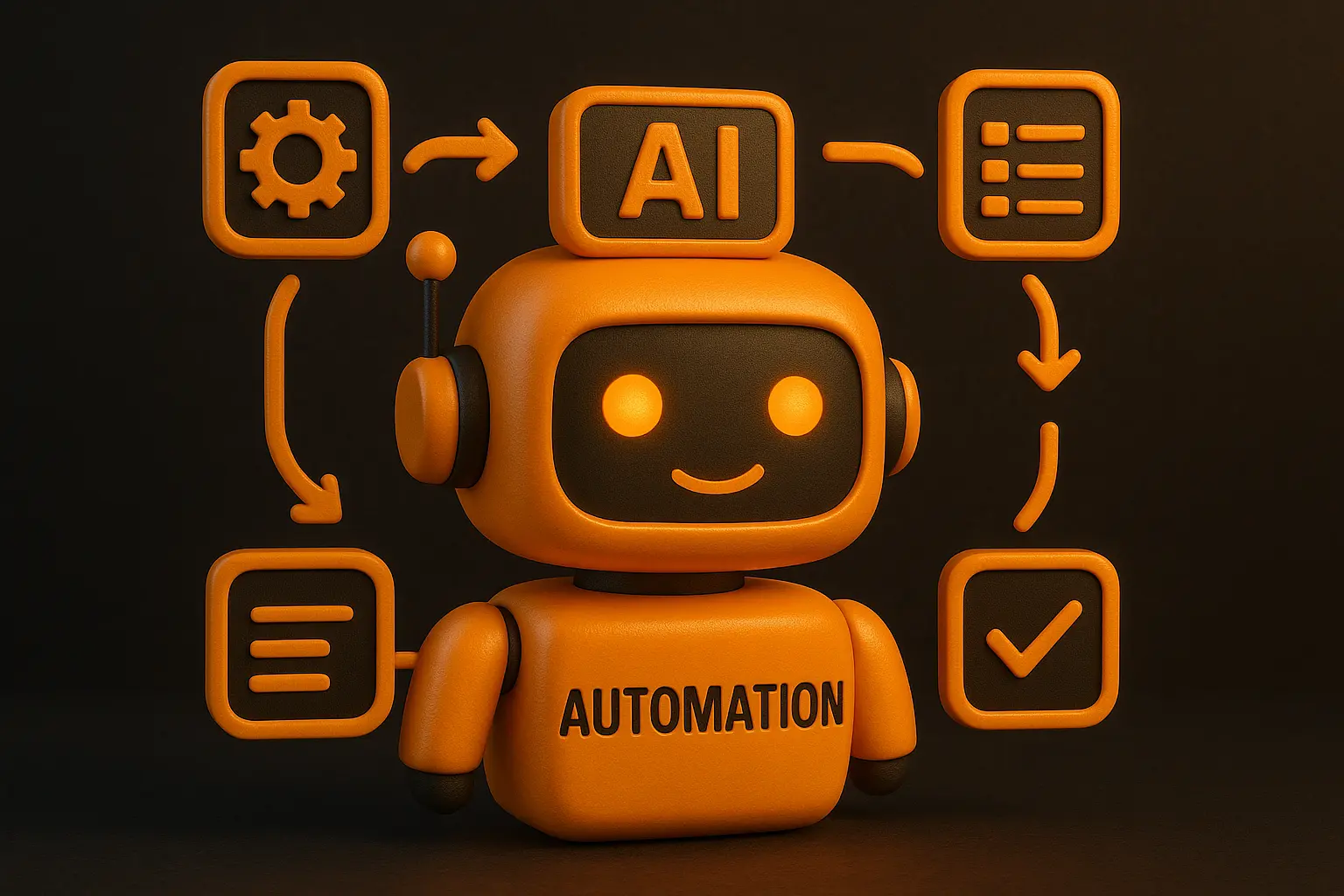
AI-powered workflow automation introduces an intelligent orchestration layer above your existing technology stack. Rather than replacing your current systems, AI connects, coordinates, and enhances them—allowing data, decisions, and actions to flow automatically and intelligently across the organization. This transforms fragmented systems into a unified, adaptive, and self-optimizing operational framework.
Beyond Robotic Process Automation (RPA)
Traditional automation relied on rigid, rule-based logic commonly known as Robotic Process Automation (RPA). These systems follow predefined instructions: if a condition is met, perform a specific action. While useful for repetitive tasks, they lack the flexibility and intelligence required to handle real-world complexity.

AI-driven automation represents a fundamental leap forward. Instead of following static rules, it uses cognitive logic—combining machine learning, natural language understanding, and contextual analysis to interpret information and make intelligent decisions.